Periodontal treatment in Hale: protecting your teeth for life
Gum disease is the leading cause of adult tooth loss in the UK, and most people don't realise they have it until it's already doing quiet damage. At Re-Ignite Dental in Hale, we're here to help you understand what's happening and protect your smile for the long term.

.avif)
Why gum health matters more than most people realise
It's easy to think of gums as the supporting act and teeth as the main event. In truth, your gums and the bone beneath them are the foundation that holds everything in place. When they're healthy, your teeth stay anchored, your smile looks fuller and fresher, and eating, talking and laughing happen without a second thought.
When they're not, the knock-on effects go further than most people expect. Loose teeth, receding smiles, persistent bad breath, and a far higher risk of losing teeth down the line. Research also links untreated gum disease to wider health concerns including heart disease, diabetes and pregnancy complications, which is why we take it so seriously.
The good news is that almost every stage of periodontal disease is treatable when caught early enough. Our job is to help you catch it, stop it and protect what you already have.
What is periodontal (gum) disease?
Periodontal disease is a progressive condition affecting the gums and the bone that supports your teeth. It typically develops in three stages:
Gingivitis
Early inflammation of the gums, usually reversible with the right care
Periodontitis
The infection reaches deeper, creating pockets between gum and tooth and slowly breaking down bone support
Advanced periodontitis
Significant bone loss, with gums receding further and teeth potentially loosening or shifting
The encouraging part? With the right plan, even advanced cases can often be stabilised and kept healthy for decades.
Signs you might need a periodontal assessment in Hale
Gum disease rarely announces itself loudly. Most people don't feel proper pain until things are well advanced, which is why paying attention to the quieter signals is so important. It's worth booking an assessment if you've noticed:
- Bleeding when you brush or floss
- Swollen, tender or bright red gums
- Persistent bad breath or a strange taste in your mouth
- Teeth that look longer than they used to
- Sensitivity around the gumline
- Teeth that feel loose or have started shifting
- Food getting stuck between your teeth more than it used to
- New gaps opening between teeth
- A family history of gum problems
If any of this sounds familiar, it's worth getting things checked. Early action almost always means easier, less involved treatment later on.
How we approach periodontal care at Re-Ignite
Every patient's mouth tells a different story, so every treatment plan we create is genuinely personal to you. Here's how your journey usually unfolds.
Understanding gum recession and when to treat it
Receding gums are one of the most common concerns we hear about, and one of the most misunderstood. When gums pull back from the teeth they expose the root surface, which is softer than enamel and far more sensitive. It can affect the look of your smile, make eating or drinking uncomfortable, and leave teeth more vulnerable to decay.
Recession usually has more than one cause. Brushing too hard with a firm toothbrush is a classic culprit. Gum disease itself, naturally thin gum tissue, tooth grinding, the way teeth sit in the bone, and smoking can all play a part. Working out what's behind it is essential, because without addressing the cause, any treatment can come undone.
Gum grafting in Altrincham: restoring what's been lost
When recession is causing ongoing problems or progressing, a gum graft can be a brilliant option. In simple terms, it's a procedure that adds tissue to an area where gum has been lost, either to cover exposed roots, thicken up thin gums, or stop further recession in its tracks.
Patients choose grafting for a mix of reasons:
- To reduce root sensitivity that's been making eating and drinking uncomfortable
- To protect roots from wear and decay
- To stop recession getting worse
- To improve how the gumline looks, especially at the front of the smile
- To build a stable foundation before other cosmetic or restorative work
When might you need periodontal surgery?
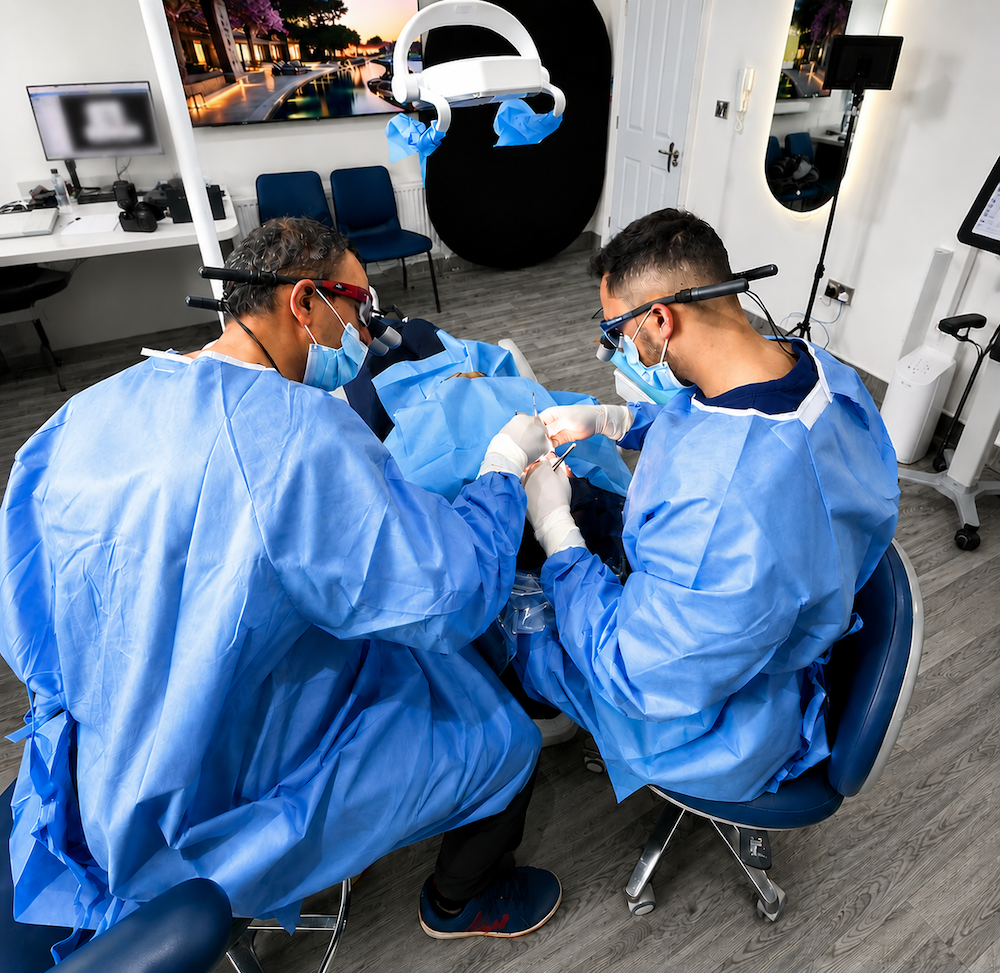
For most patients, non-surgical treatment is enough. But there are situations where deeper pockets around certain teeth simply can't be reached or cleaned thoroughly without surgical access. In those cases, surgery isn't a last resort, it's the tool that actually solves the problem and protects the teeth long term.
You might be a candidate for periodontal surgery if:
- Deep pockets remain around some teeth after non-surgical cleaning
- Certain areas keep bleeding or flaring up despite good home care
- Bone loss is beginning to affect how firmly a tooth is held
- Gum recession is progressing or causing symptoms
- Specific areas of your mouth are genuinely difficult to clean effectively
- We want to improve the long-term outlook for particular teeth
Surgery is only recommended when it's going to make a clear difference. If it isn't the right answer, we won't suggest it.
Types of gum surgery we offer near Manchester
Periodontal surgery is a family of procedures, each designed to tackle a specific issue. Here's what we offer at our Hale practice.
Pocket reduction surgery
For stubborn deep pockets, this procedure reduces their depth so you can actually clean them properly at home. It's one of the most impactful treatments for advanced gum disease.
Flap surgery
The gum is gently lifted to allow thorough cleaning of the roots and bone underneath, then carefully repositioned for a snug, healthy seal.
Osseous surgery
For more advanced cases where bone needs reshaping to give the gum a better contour to heal against.
Regenerative procedures
In selected cases, we can use special materials to encourage new bone and tissue growth where it's been lost, helping restore some of what the disease took away.
Crown lengthening
Used to expose more of a tooth, either for cosmetic reasons (such as reducing a gummy smile) or to make a broken or decayed tooth restorable.
Gum grafting
Covered above, this restores gum tissue where recession has taken it away.
All surgical treatment is carried out under careful local anaesthetic, using gentle techniques designed to keep you as comfortable as possible throughout.
What makes our periodontal care in Hale different?
There are plenty of places in Manchester and Altrincham offering gum treatment, so here's what sets our approach apart.
We don't leap to surgery. Stabilisation always comes first, and many patients never need anything more. Every case is looked at through both a periodontal and a restorative lens, because gums, teeth and bite all work together. We favour minimally invasive techniques and long-term results over quick fixes. We'll tell you honestly when treatment isn't needed, or when a simpler option will do the job. And we put real weight on aesthetics, not just health. Your smile should look as good as it feels.
Behind all of that sits a commitment to clarity. You'll always leave appointments knowing what's happening, what your options are, and what comes next.
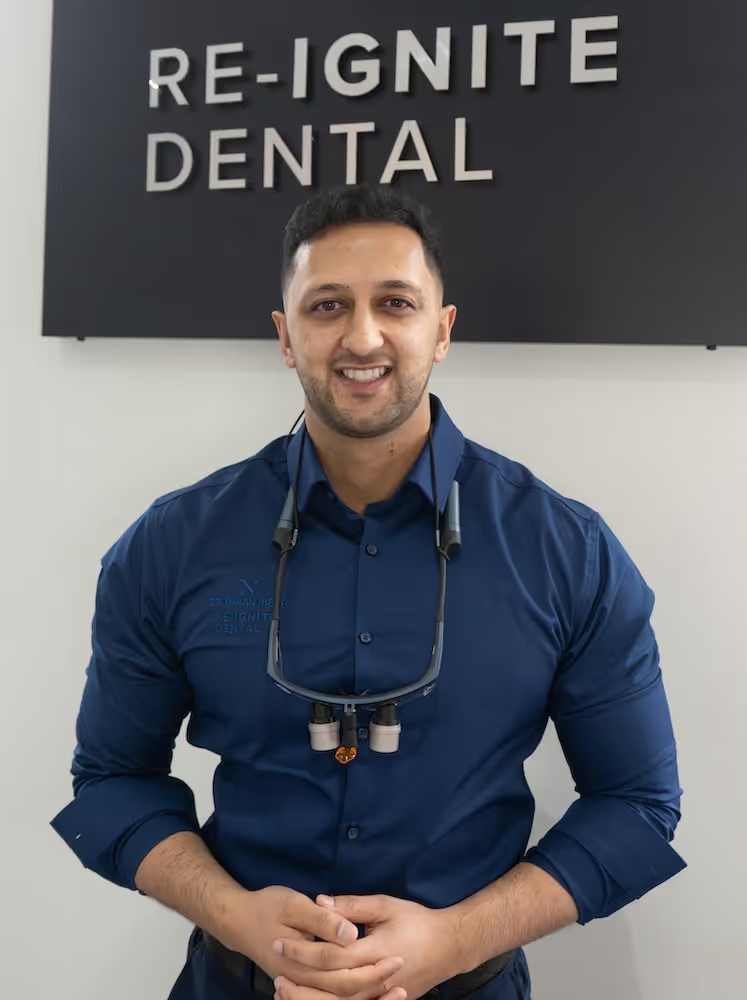
Meet the clinician behind your treatment
All periodontal assessments and surgical treatment at Re-Ignite are carried out by Dr Imran Nisar, the practice's founder. His qualifications include:
- BDS (Hons)
- MFDS RCSEng
- Postgraduate Diplomas in Restorative Dentistry, Periodontics and Endodontics
- Advanced training in prosthodontics and complex rehabilitation
- Currently completing an MSc in Prosthodontics
How much does periodontal treatment cost in Hale?
We believe in being upfront about fees. You'll always receive a written treatment plan before anything begins, and there are no hidden extras along the way. Here's a guide to our main periodontal fees.
Complex cases can involve slightly different costs, and we'll always walk these through with you in advance. We also offer 0% finance over up to five years through Tabeo, which can make more involved treatment far easier to manage month to month.
Our pricing sits within our Fair Pricing and Transparency Charter. Honest, consistent fees that reflect the time, training and materials genuinely involved in your care.
Frequently asked questions about gum care and surgery
Do I always need surgery for gum disease?
Not at all. Most patients stabilise beautifully with non-surgical treatment and a good maintenance plan. Surgery is only recommended when it will make a real difference to a specific area that won't settle any other way.
Can receding gums grow back on their own?
Unfortunately not. Once gum tissue has receded it doesn't return by itself. What we can do is stop it progressing, and in suitable cases use a gum graft to restore lost coverage and improve how things look and feel.
Is gum surgery uncomfortable?
The procedure itself is carried out under local anaesthetic, so you won't feel the treatment while it's happening. Afterwards, most patients describe the recovery as manageable soreness rather than severe discomfort, and it's usually well controlled with standard painkillers. We'll talk you through exactly what to expect beforehand so there are no surprises.
What does recovery look like after gum surgery?
Most patients are pleasantly surprised by how manageable it is. You can expect some mild to moderate soreness for a few days, possibly a little swelling or tenderness, and temporary sensitivity in the treated area. You'll likely modify how you brush around that spot for a short period while things heal, and most people get back to their normal routine quickly. Full gum healing takes a few weeks, during which we'll support you with clear written aftercare instructions, tailored advice on eating and cleaning, follow-up appointments and a direct line to our team if any questions come up. If the idea of surgery makes you anxious, please do tell us. We look after a lot of nervous patients and we'll take every step we can to keep the experience calm and well-paced.
Will gum disease come back after treatment?
Gum disease is a chronic condition, which means it can return if not properly maintained. That's why we place so much emphasis on regular hygiene visits and tailored home care. With good long-term maintenance, most patients keep their results for the long haul.
How long does gum grafting take to heal?
The initial healing usually takes a couple of weeks, with most people back to normal activities within a few days. Full tissue maturation continues over several months, but it isn't something you'll notice in your day-to-day life.
Is periodontal treatment covered by a dental plan?
Our Re-Ignite dental plan includes a discount on general dentistry, which can help towards the routine check-ups and hygiene appointments that support your gum health. Surgical treatment is priced separately, and finance options are available to spread the cost.
I'm nervous about dental treatment, can you help?
Absolutely. We look after a lot of patients who've had less-than-positive experiences in the past, and we take extra time to make sure you feel calm, informed and in control throughout. Just let us know when you book and we'll structure your first appointment to help you settle in gently.
How do I know if I have gum disease in the first place?
The honest answer is that you often don't, until someone checks properly. Bleeding gums, bad breath, sensitivity or changes in how your teeth look or feel can all be signs. A proper periodontal assessment is the only way to know for sure.
Ready to book your appointment in Hale?
If something's been on your mind, or you simply want to make sure things are as healthy as they should be, we'd love to see you. Our practice is two minutes from Hale train station with parking nearby, and we offer appointments into the evening and on Saturdays for those who need a bit of flexibility.
Good gum health isn't about perfection. It's about protecting what you have, catching problems early, and building a foundation that supports your smile for life. Let's start with a proper conversation